Canned luncheon meat is a high-volume pantry staple — a fully cooked, sliceable, shelf-stable protein that people fry for breakfast, slice into sandwiches, drop into rice, noodles or stews, or turn into a quick meal straight from the tin. In its biggest markets — the Middle East, Southeast Asia, and across Africa — one word on the label matters more than the brand: Halal.
And here is the part most sourcing guides get wrong. The hard part of a halal luncheon-meat programme is not the recipe or even the factory. It is making sure the halal certificate on your product is one that your destination country actually recognises — because a certificate that clears one market can be worthless at the next port. Get that right and you have a category families restock every week; get it wrong and your container sits at customs.
This guide is for importers, distributors, and brand owners who want to source or private-label halal luncheon meat from China and understand exactly what they are buying — the recipes, the formats, the halal recognition maze, and how to tell a real manufacturer from a trading company.
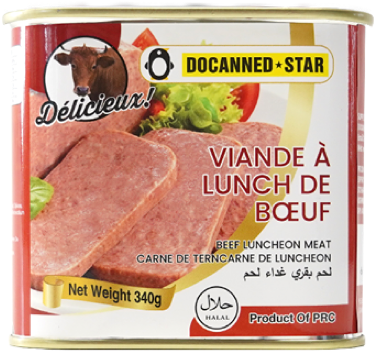 Beef · 340 g
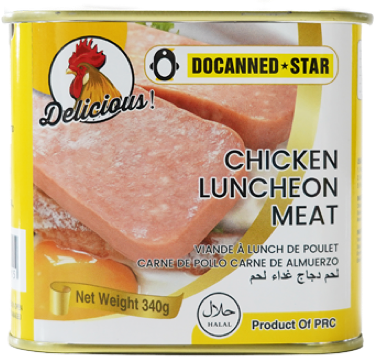 Chicken · 340 g
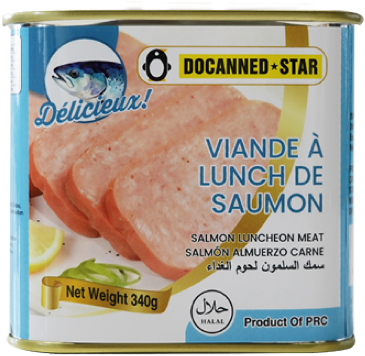 Fish · 340 g
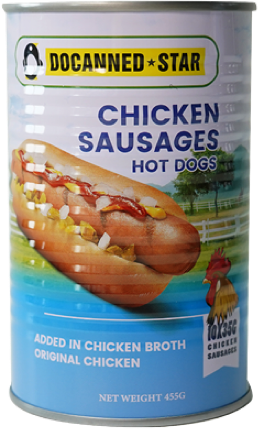 Chicken Sausage · 425 g
Who buys halal luncheon meat, and what they expect
Luncheon meat is best understood as the halal-friendly answer to the famous pork-based tinned meats: a sliceable loaf of fully cooked meat, but made from chicken, beef, or fish so it can be sold where pork cannot.
Where it sells
- Middle East (GCC and wider MENA) — a core market, where halal is mandatory for meat and Arabic labelling is expected.
- Southeast Asia — Malaysia, Indonesia, Singapore, Brunei, and the wider region, where halal is both cultural and, increasingly, legally mandatory.
- Africa — across many markets as an affordable, shelf-stable protein.
What shoppers expect: a firm, clean slice that holds together out of the tin (not a soft, watery one), a recognisable flavour, an easy-open tin, a reliable price, and a long shelf life that survives warm storage and long supply chains. If your product matches those expectations and carries a halal mark the market trusts, it has a real chance.
The product: what canned luncheon meat actually is
Luncheon meat is a smooth, emulsified meat loaf, fully cooked inside the sealed can by a validated retort heat process — that is what gives it commercial sterility and a long shelf life without refrigeration. A typical formulation is simple: the protein (chicken, beef, or fish), water, a little starch for bind and texture, spices, and salt.
The simple ingredient list hides the thing that actually decides quality: meat content. A higher meat percentage gives a firmer, cleaner slice and a better eat; a lower one, padded with water and starch, gives a soft, pale product that disappoints on the plate. Meat content is also the single biggest driver of cost. So the most important line in your specification is not “luncheon meat” — it is the protein, the meat percentage, and the texture you want, in writing.
The three proteins, and how they differ
- Chicken — the core of the category: mild, pale, widely accepted, and the usual value-to-quality sweet spot.
- Beef — richer and more savoury, and typically the premium tier on price.
- Fish — the lighter, most economical everyday option.
The Docanned halal luncheon-meat lineup
| Number | Products | Ingredients | Net Weight | Packing |
|---|---|---|---|---|
| 1 | Premium luncheon meat — original beef | beef meat, water, starch, soy protein isolate, table salt, compound phosphate, food flavor, spices | 198 g, 340 g | 198g×24cans×3950cartons/20’fcl 340g×24cans×2350cartons/20’fcl |
| 2 | Premium luncheon meat — original chicken | chicken breast meat, water, starch, soy protein isolate, table salt, compound phosphate, food flavor, spices | 198 g, 340 g, 397 g | 198g×24cans×3950cartons/20’fcl 340g×24cans×2350cartons/20’fcl 397g×24cans×2300cartons/20’fcl |
| 3 | Premium luncheon meat — original fish | fish meat, water, starch, soy protein isolate, table salt, compound phosphate, food flavor, spices | 198 g, 340 g | 198g×24cans×3950cartons/20’fcl 340g×24cans×2350cartons/20’fcl |
| 4 | Canned chicken sausage | chicken, water, starch, soy protein isolate, salt, monosodium glutamate, spices, collagen casings, food additives (sodium diphosphate, sodium triphosphate, carrageenan, d-sodium erythorbate, monascus red, flavor) | 425 g | 425g×24cans×1880cartons/20’fcl |
Shared across all SKUs: 100% Halal · fully cooked and shelf-stable · tin in easy-open (ring-pull) or standard open · paper label / lithographic printing · shelf life: 3 years · origin: Fujian, China · OEM / private label welcome.
A note on weights: unlike canned fish in sauce, luncheon meat is a solid loaf, so the net weight is effectively the product weight — there is no large “drained weight” gap to watch. The numbers above are the real figures to design your range around.
Sizes and formats that sell
- 198 g and 340 g are the core retail tins; 340 g is the classic, recognisable luncheon-meat format.
- 397 g (chicken) is a popular larger format in several markets.
- Easy-open (ring-pull) vs standard ends: easy-open wins on convenience in most retail markets; standard ends can cost less for price-sensitive or food-service channels. Choose per market.
Container loading. Luncheon meat is dense, so a 20-foot container reaches its weight limit before it fills the space — which is why it almost always ships in 20-ft. Using the real figures above, you can plan exact volumes: for example, 340 g tins load 24 × 2,350 = 56,400 cans per 20-ft, while 198 g tins load 24 × 3,950 = 94,800 cans. If you can’t fill a container with one product, ask whether the factory allows mixed-product loads so you can combine luncheon meat with canned fish or vegetables.
The halal maze: the part that actually decides your shipment
This is where most buyers get caught, and where this guide earns its keep. For a meat product, halal is not a single global standard and not a single logo. Different markets recognise different certifying bodies, and a certificate accepted in one country can be rejected at the next port. Requirements also change, so treat the list below as a map, not gospel — and confirm current rules with a licensed agent for each market.
What the main markets require:
- Malaysia — JAKIM. The Department of Islamic Development Malaysia is the sole authority, working to the MS 1500:2019 standard. Malaysian customs only accept halal certificates from foreign halal certification bodies (FHCBs) that JAKIM has formally recognised — and that recognised list is short. Halal is mandatory for animal-based products.
- Indonesia — BPJPH. Under Indonesia’s Halal Assurance Law (33/2014), halal certification became mandatory for packaged food and beverage from October 2024. Indonesia recognises BPJPH certification (or a foreign body that holds mutual recognition with BPJPH). A common, costly mistake is assuming a Malaysian JAKIM certificate is valid in Indonesia — it is not automatically accepted.
- Gulf (GCC) — GSO standards. The Gulf works to GSO 2055-1, with national schemes on top: UAE (MoIAT / EIAC, mark UAE.S 2055) and Saudi Arabia (SFDA Halal Centre). Meat is a controlled, halal-mandatory category across the GCC. Helpfully, there is mutual recognition between JAKIM and the Gulf.
- Singapore — MUIS, and other markets (Brunei, Turkey’s HAK/SMIIC) each run their own rulebook.
The practical lesson for sourcing from China. A Chinese factory may hold a domestic halal certificate (for example from the China Islamic Association), but that certificate is not automatically recognised by JAKIM, BPJPH, or the Gulf schemes. So the question to ask a manufacturer is not simply “are you halal?” — it is:
“Which halal body issued your certificate, and is that body recognised in the specific market I am shipping to?”
Also confirm that the halal mark you print on the pack is one the destination permits (an unregistered logo can hold a container), and that the product name, manufacturer, and scope on the certificate match the shipment exactly.
Beyond the certificate, a credible halal meat line also means a dedicated, pork-free facility, poultry and beef from approved, audited suppliers, and the whole chain under HACCP control from intake to retort.
Other certifications and compliance
- Factory food-safety certifications: BRCGS and HACCP, ISO 9001 and ISO 22000, FDA registration, and GMP — current, and covering this product and facility.
- Fully cooked, commercially sterile: confirm the factory can show a scheduled retort process validated by a qualified process authority, with records of heat-penetration studies and intact can double-seams.
- The HS code: prepared or preserved meat generally sits under HS heading 1602 — 1602.32 for chicken (poultry) luncheon meat and 1602.50 for beef (bovine); a fish luncheon meat is classified under 1604 instead. Confirm the exact national tariff code and duties with your customs broker.
Private label vs OEM
- Private label: the factory’s existing recipe under your brand and label.
- OEM: produced to your specification — meat content, recipe, tin type, net weight, label, and carton.
A launch path that fits this category:
- Choose proteins and sizes — e.g. chicken 340 g as your core, plus 198 g and/or a beef premium line.
- Set your meat content and price point against the brands you’ll sit beside on the shelf.
- Start halal recognition and in-country registration early — confirm the factory’s halal certificate is accepted in your market (JAKIM / BPJPH / GSO), and begin any product registration. This is usually the longest lead item.
- Design a compliant, market-native label — right language (Arabic for MENA), the correct and permitted halal mark, ingredient and allergen statements, net weight, country of origin, barcodes.
- Sample and taste-test the exact spec — check the slice, firmness, and flavour.
- Run a first production with pre-shipment inspection, then scale.
If your volume is below a factory’s OEM minimum, some manufacturers also sell a ready-made brand you can distribute — a practical route for smaller buyers.
MOQ, cost, and lead time
What drives the price (in order of impact):
- Meat content — the biggest lever by far; more real meat, higher cost.
- Protein — beef is typically the most expensive, then chicken, then fish.
- Tin type — easy-open ends add cost over standard ends.
- Custom recipe, labels, and market certifications — all add cost.
MOQ is usually quoted per size and market rather than as one fixed number; many factories work to one 20-foot container per size, with room to discuss lower minimums for new private-label partners. Send your market, proteins, sizes, target meat content, and volume for an exact figure.
How to vet a halal luncheon meat manufacturer in China
- Confirm they manufacture — ask to see the cannery (video, audit report, or visit), and, if claimed, the in-house can-making.
- Verify the halal chain, not just the logo — pork-free dedicated facility, audited meat suppliers, and a halal certificate from a body your destination market recognises.
- Check the other certificates — BRCGS, HACCP, ISO 9001/22000, FDA, GMP — current and in scope.
- Lock the spec in writing — protein, meat content, net weight, tin type (easy-open or standard), shelf life, and label.
- Taste a sample of the exact spec before ordering.
- Clarify MOQ, Incoterms, inspection, and mixed-load options.
The most common mistakes: assuming “halal” is one universal certificate; ordering a low-meat, watery product that won’t re-order; and leaving halal recognition and country registration to the last minute.
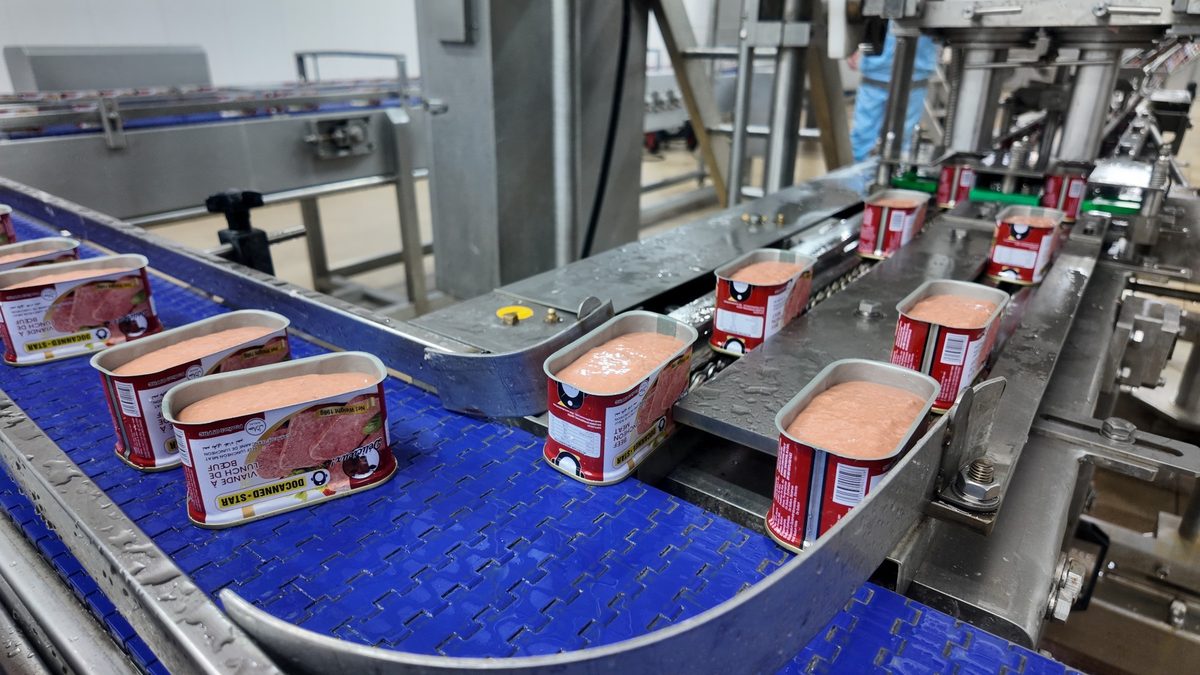
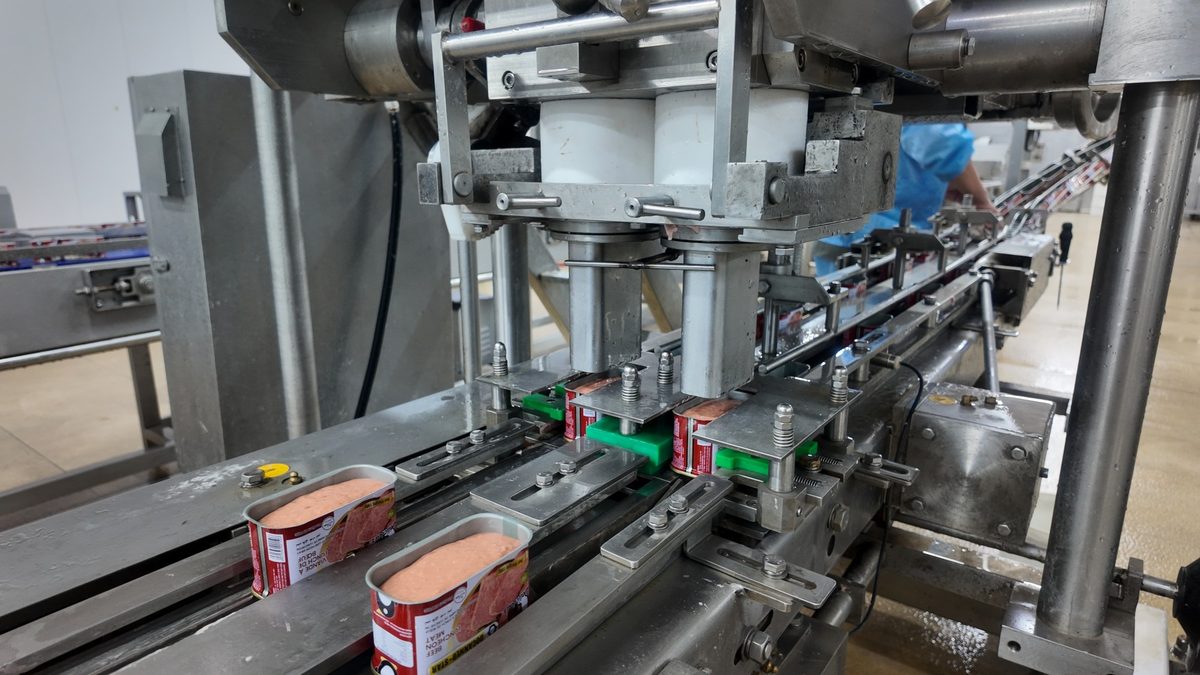
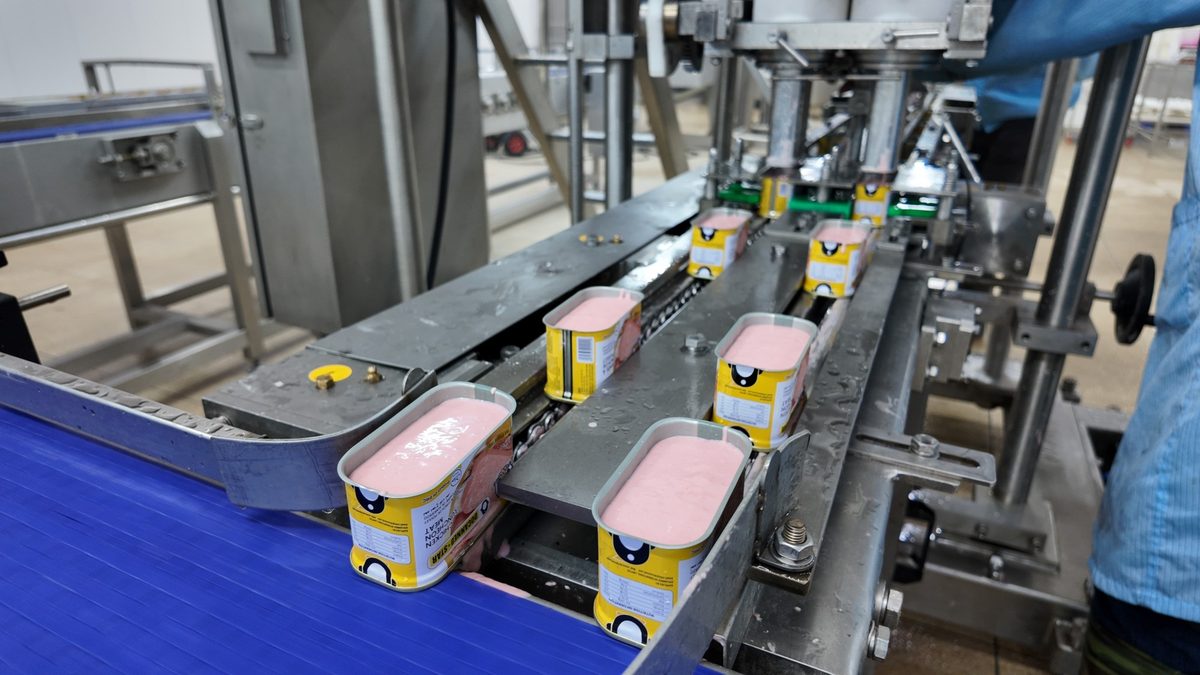
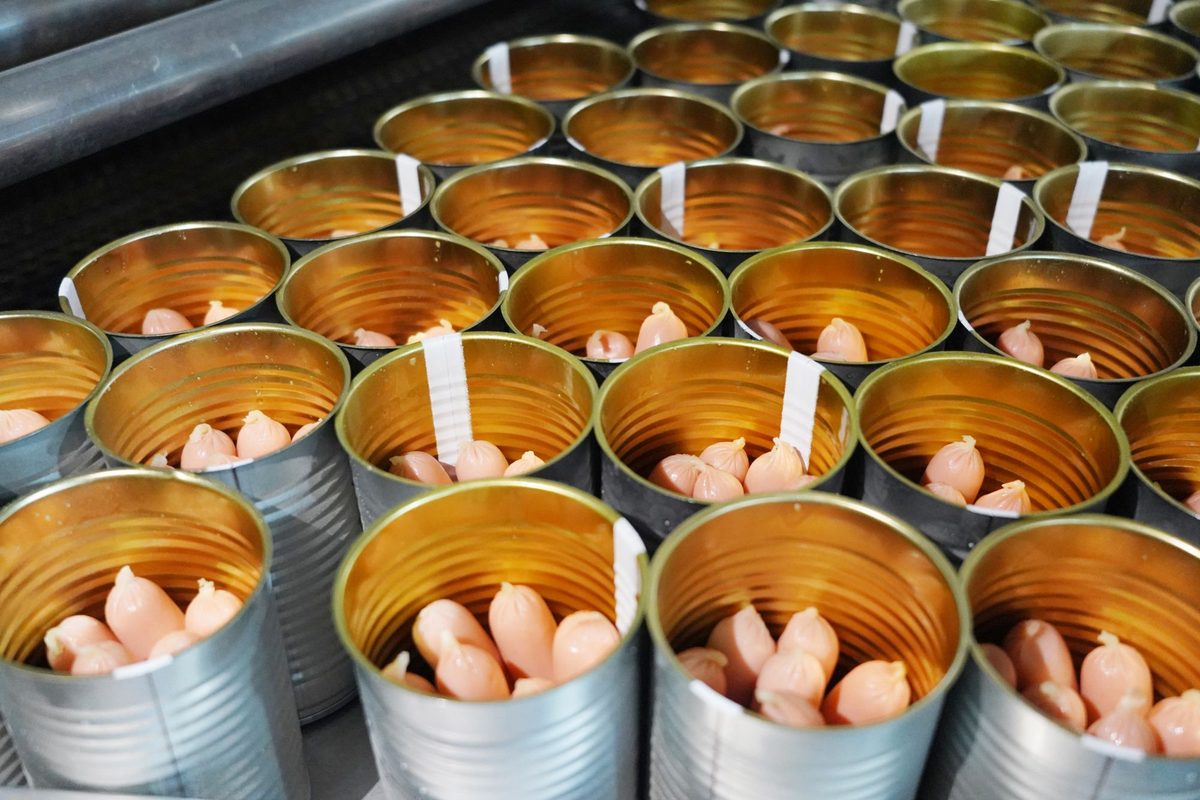
Inside the Docanned cannery — the halal luncheon-meat and chicken-sausage lines.
Why buyers choose Docanned for halal luncheon meat
Docanned (Fujian Docanned Food Co., Ltd.) is a vertically integrated canned-food manufacturer in Fujian, China, established in 1986 and exporting to 86+ countries. For halal luncheon-meat buyers:
- 100% Halal, three proteins. Chicken, beef, and fish luncheon meat (plus chicken sausage), fully cooked and shelf-stable, with meat from approved, audited suppliers under HACCP control — produced pork-free.
- A-to-Z, in-house — including the tin. Docanned owns its own tin-can plant, so custom tin shapes, sizes, and easy-open formats, and full private-label programmes, run without waiting on a third-party can supplier.
- Certifications that open markets: ISO 9001, ISO 22000, HACCP, Halal, BRCGS, FDA, and GMP.
- Real, ready formats: 198 g / 340 g / 397 g chicken, 198 g / 340 g beef and fish, 3-year shelf life, easy-open or standard tins — available as a ready-made brand or under full private label / OEM (your recipe, meat content, tin, label, and carton).
Because Docanned is the manufacturer, you deal with the factory directly and control the specification end to end. For related products, see our guides to sourcing a canned sardines, canned tuna, and canned mackerel manufacturer in China.
Ready to source or private-label halal luncheon meat?
Partner with a factory that owns its entire process — and secure a supply chain that scales with your growth.
Request a quote & free samples →Frequently asked questions
Is Docanned’s luncheon meat halal and pork-free?
Yes. All of Docanned’s luncheon meat is 100% halal and made from chicken, beef, or fish — never pork — with meat from approved, audited suppliers under HACCP control.
Will a Chinese halal certificate be accepted in my market?
Not automatically. Halal is not one global standard: Malaysia (JAKIM), Indonesia (BPJPH), and the Gulf (GSO / SFDA / MoIAT) each recognise specific certifying bodies. Before you order, confirm that the factory’s halal certificate is issued by a body your destination country recognises, and that the halal mark you print is one that market permits.
What proteins and sizes are available?
Chicken luncheon meat in 198 g, 340 g, and 397 g; beef and fish luncheon meat in 198 g and 340 g; and chicken sausage in 425 g. All with a 3-year shelf life, in easy-open or standard tins.
How is halal luncheon meat different from the famous pork tinned meats?
It is the same idea — a fully cooked, sliceable, shelf-stable meat loaf — but made from chicken, beef, or fish instead of pork, so it can be sold in halal markets.
What is the shelf life, and does it need refrigeration?
The shelf life is 3 years, and it does not need refrigeration before opening — it is fully cooked and commercially sterile from the retort process. Store in a cool, dry place.
Can I private-label with my own recipe and Arabic label?
Yes. With a manufacturer you can set the protein, meat content, net weight, tin type, label (including Arabic), and carton under your own brand. Below the OEM minimum, some suppliers also offer a ready-made brand to distribute.
What is the MOQ for private-label luncheon meat?
There is no single fixed number — it depends on the size, tin type, and whether the run is a stock label or fully custom. Many factories work to one 20-foot container per size. Send your proteins, sizes, target meat content, and volume for an exact figure.
What is the HS code for canned luncheon meat?
Prepared or preserved meat generally falls under HS heading 1602 — 1602.32 for chicken and 1602.50 for beef; a fish luncheon meat is classified under 1604. Confirm the exact national code and duties with your customs broker.