Canned mackerel is not really a “seafood” product the way tuna is. In its biggest markets — West Africa, the Caribbean, and the African diaspora in Europe and North America — it is a daily pantry staple, known simply as “tin fish,” eaten with rice, yam, plantain or bread, or cooked into a stew. If you are sourcing it, you are not selling a delicacy; you are entering a category that families buy every week and that already has strong, trusted names.
That changes what “sourcing well” means. Success here is less about the fish being rare and more about hitting the format, the taste, the price, and — the part most guides skip — the country registrations that decide whether your cans can even clear customs. This guide is for importers, distributors and brand owners who want to source or private-label canned mackerel from China and actually move volume in these markets.
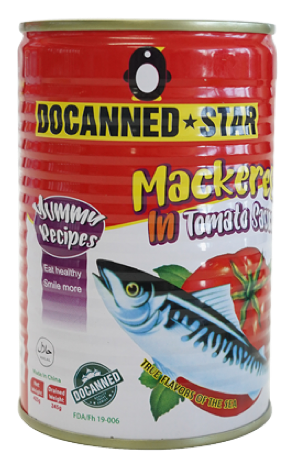 In Tomato Sauce
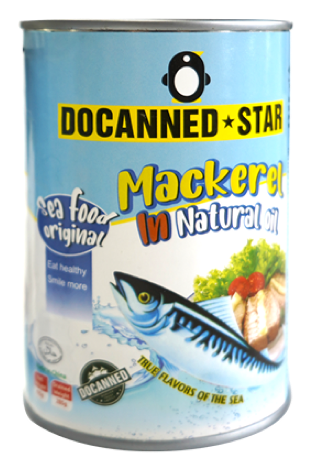 In Natural Oil
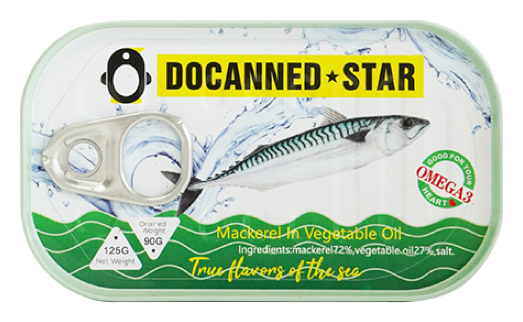 In Vegetable Oil
Know the market before you know the factory
Most sourcing guides start with the factory. For mackerel, start with the shelf you are trying to get onto, because it shapes every spec you will order.
Where canned mackerel sells — and who you compete with
The heartland is West Africa — Nigeria, Ghana and their neighbours — followed by the Caribbean, pockets of Central and Southern Africa, and the large African diaspora shopping in African grocery stores across the UK, US and Europe. In these markets buyers already know brands such as Titus, Geisha and Aben Wa Ha. Your private label is not creating a category; it is competing inside one, so you need to match what shoppers already expect.
What the product is called locally
The local name tells you how to label and market it:
| Market | Local name |
|---|---|
| Nigeria / Ghana (English) | “Tin fish,” often called by the leading brand name |
| East Africa (Swahili) | Samaki ya kopo katika mchuzi wa nyanya (canned fish in tomato sauce) |
| Southern Africa (Afrikaans) | Blikkievis in tamatiesous |
| Sierra Leone & others | Local names such as “Salone fish tin” |
What “good” means to these shoppers
Tender mackerel steaks, a rich (not watery) tomato sauce, a can that opens easily, a reliable price, and a shelf life that survives long supply chains and warm storage. Match those expectations at the right price and you have a chance; a watery, bland or oddly-sized product will not sell, however you market it.
The product: what canned mackerel in tomato sauce actually is
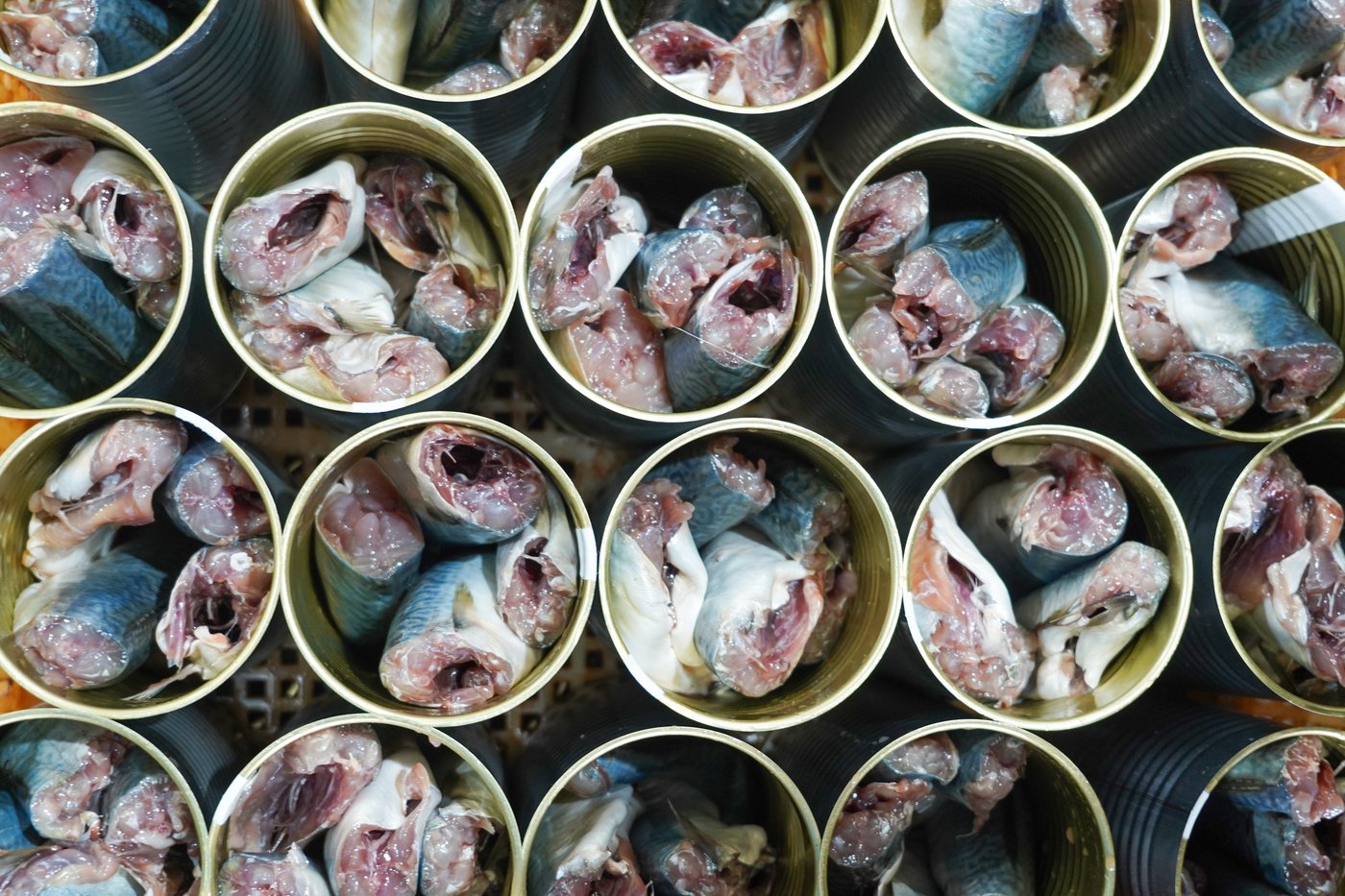
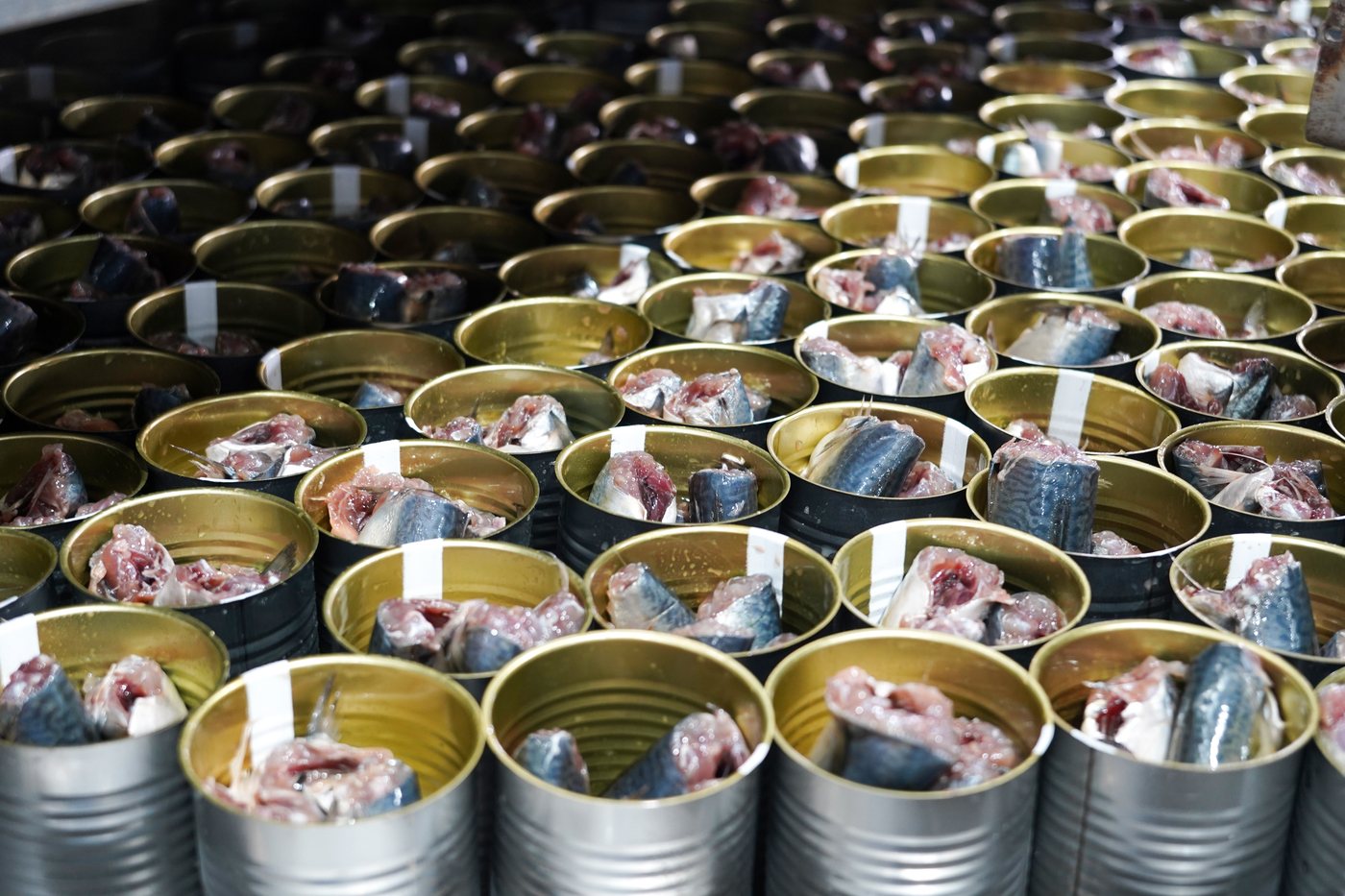
Canned mackerel is an oily fish packed as steaks (cross-cut pieces), sometimes fillets, in a sauce or liquid. The volume version, by a wide margin, is tomato sauce. A typical formulation is straightforward — mackerel, water, tomato paste, sugar, salt, and often a little modified starch to give the sauce body. The details inside that simple list are where products win or lose:
- Sauce richness. The tomato-paste percentage and starch level decide whether the sauce reads as “rich” or “watery” — a thin sauce is the most common complaint in this category. Docanned packs mackerel in a rich, real-tomato-paste sauce built for the tin-fish shelf; pin the richness you want in writing.
- Fish-to-sauce ratio. This is the drained weight (below) — how much fish the shopper actually gets.
- The chili version. “Mackerel in tomato sauce with chili” (a Scotch-bonnet-style heat) is a real, separate SKU with strong demand in West Africa — worth carrying alongside the plain version.
Other packing media have their place — brine water (lighter, favoured in some European and health-focused channels), vegetable oil (soybean, sunflower or olive) and oil with chili — but for the core tin-fish market, tomato sauce is the product.
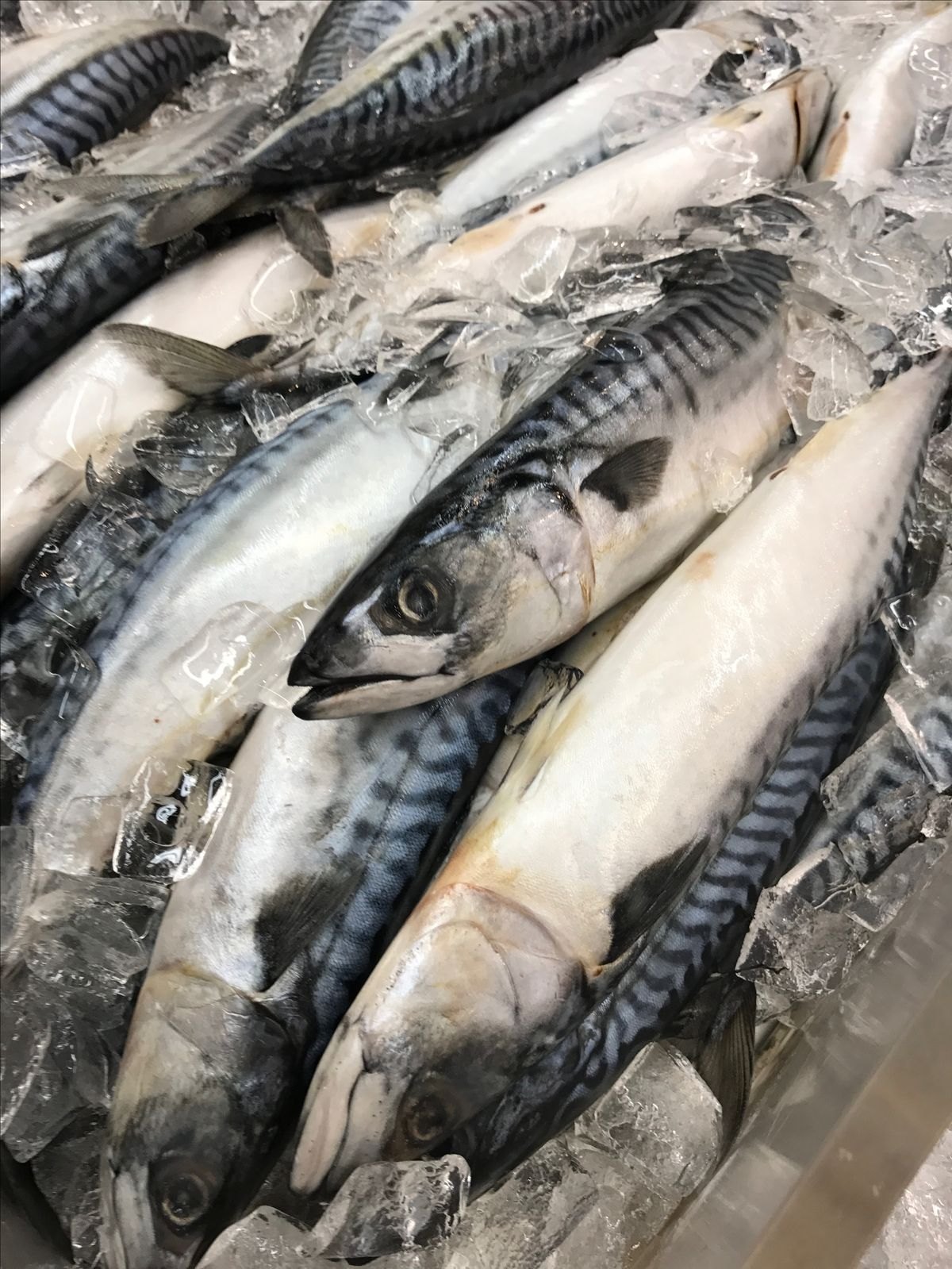
The fish itself. Docanned cans chub mackerel (Scomber japonicus) — the classic tin-fish mackerel — alongside Atlantic mackerel (Scomber scombrus), cold-stored from the catch. Confirm the exact species and its scientific name in your specification, because “mackerel” alone is not enough for a label or a customs entry.
Can sizes that actually sell
Get the format wrong and the product will not move, however good the fish is. Two sizes carry this category, with a catering tin for food service:
| Size | Role | Docanned pack |
|---|---|---|
| 155 g (about 5.5 oz) | Single-serve tall can — high rotation, impulse / single-meal | 50 × 155 g · drained weight 85 g |
| 425 g (about 15 oz) | The family can — the workhorse of the category | 24 × 425 g · drained weight 235 g |
| Catering | Larger A-type tins for canteens and food preparation | On request |
Watch the drained weight, not just the net weight. Net weight is fish plus sauce; drained weight is the fish alone — the number buyers and regulators care about, and where cheaper products quietly cut. As a market reference, a well-known 425g tomato-sauce mackerel lists a drained weight of roughly 255 g; Docanned’s 425 g in tomato sauce runs a 235 g drained weight. Set your own target clearly.
Container loading (20-ft). Because canned fish is heavy, a 20-foot container usually reaches its weight limit before it fills the space — so mackerel almost always ships in 20-ft:
- 425 g: 24 cans per carton · about 1,880 cartons per 20-ft container.
- 155 g: 50 cans per carton · about 2,050 cartons per 20-ft container.
- Shelf life: up to 3 years at ambient temperature.
If you cannot fill a container with mackerel alone, ask whether the factory allows mixed-product loads (mackerel with sardines, tuna or tomato paste).
The registrations that decide whether you can sell
This is the part that separates buyers who ship successfully from buyers who get a container stuck at port. There are two layers: the factory’s food-safety certifications, and the destination country’s import registrations for your product and brand.
Factory food-safety certifications
- BRCGS and HACCP — internationally recognised food-safety standards.
- ISO 9001 / ISO 22000 — quality and food-safety management systems.
- Halal — required across Muslim-majority markets (and much of northern Nigeria and the wider region).
- FDA registration and GMP — facility registration and good manufacturing practice.
Confirm the certificates are current and cover this product and this facility.
Destination-market registrations for canned fish
These are product/brand registrations you (or your local partner) usually must hold before you import. Requirements change, so confirm the current rules with a licensed local agent — but for the tin-fish markets, plan for:
- Nigeria: imported packaged food generally needs NAFDAC product registration, and regulated imports typically need a SONCAP certificate before shipment. These take time; start early.
- Ghana: product registration with the Ghana FDA.
- Other West-African / Caribbean markets: each has its own food-import registration and labelling rules — check per country.
- MENA: valid Halal certification and correct Arabic labelling.
Two practical notes. The factory’s certificates support these applications but are not the same as your destination registration — you still register the product/brand in-country. And labelling must be built for the market from the start (language, ingredient and allergen statements, net and drained weight, country of origin, barcodes, and any market-specific marks).
The HS code
For customs, prepared or preserved mackerel (whole or in pieces) falls under HS heading 1604.15. Confirm the full national tariff code and duties with your customs broker.
Food safety specific to mackerel
Two technical points matter more than any marketing line, and both are worth asking a factory about directly:
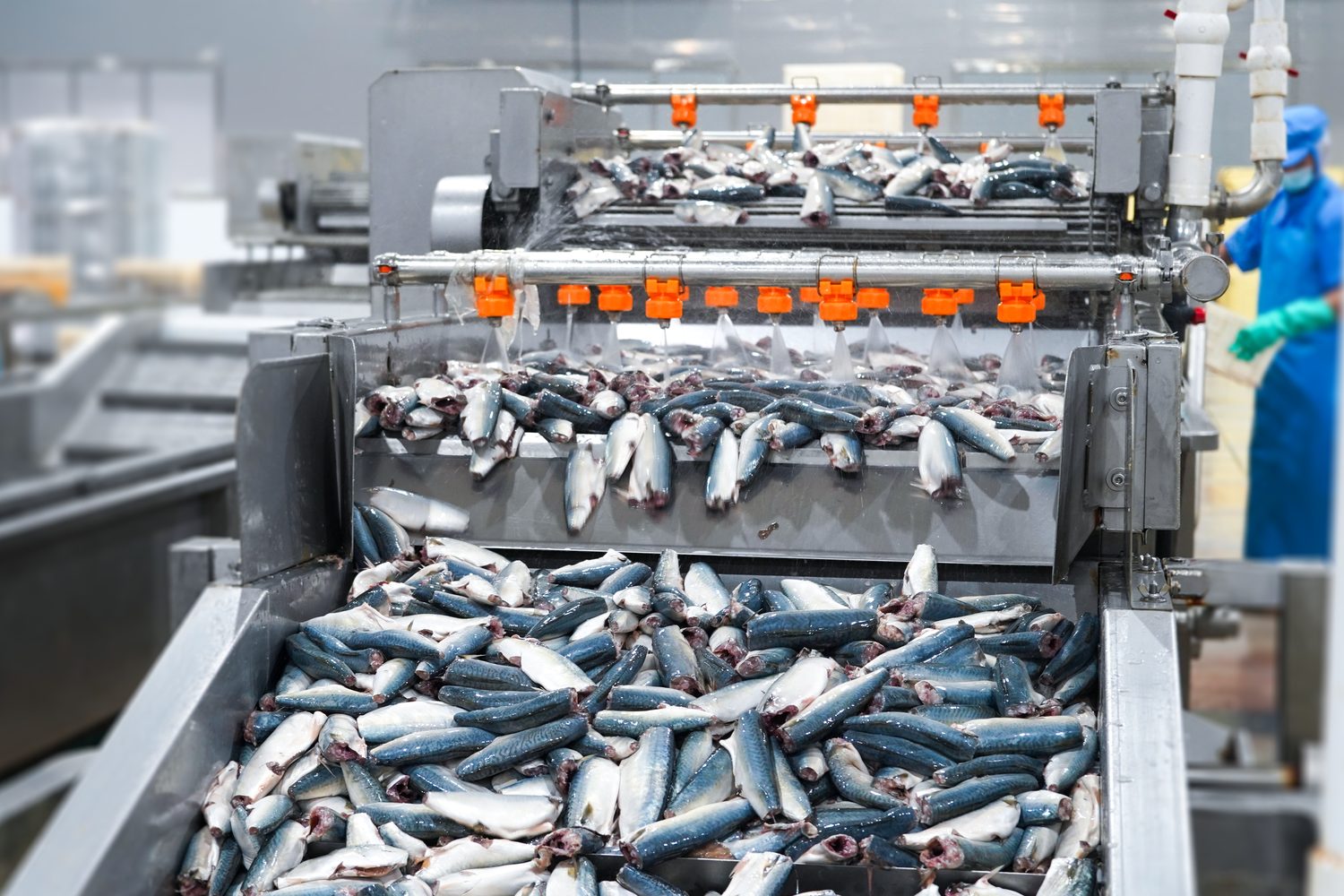
- Histamine (scombrotoxin) control. Mackerel is a scombroid fish, so it can form histamine if the raw fish warms up before it is processed — and histamine is not destroyed by cooking or canning. High histamine is a genuine cause of rejected canned-fish shipments. The defence is an unbroken cold chain from catch to can — a concrete reason to favour a supplier with its own cold storage rather than one relying on third parties.
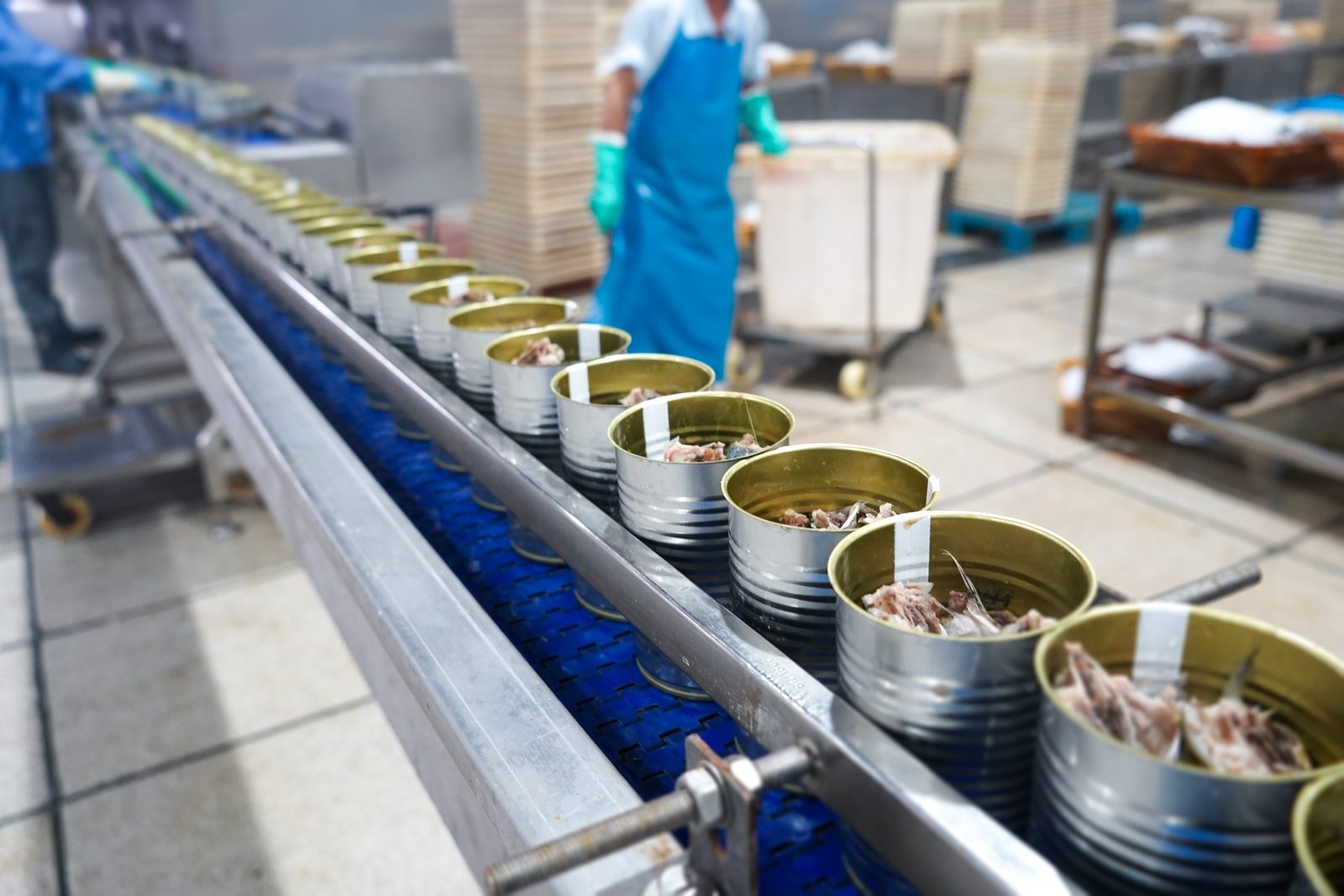
- Thermal processing (retort). Canned mackerel is a low-acid food and must receive a validated heat treatment to be shelf-stable and safe. A credible factory can show a scheduled process validated by a qualified process authority, records of retort temperature-distribution and heat-penetration studies, and intact can double-seams.

Building your own tin-fish brand: private label vs OEM
- Private label: the factory’s existing recipe, sold under your brand and label.
- OEM: the factory produces to your specification — recipe, sauce richness, size, tin type, label and carton.
Steps that fit this category specifically:
- Match the market format first — decide 425 g and/or 155 g, tomato sauce (and whether to add a chili SKU), and the sauce richness you want.
- Set the drained weight and price point against the brands you will sit next to on the shelf.
- Start the country registration early — NAFDAC/SONCAP (Nigeria), Ghana FDA, or your market’s equivalent, in parallel with production. This is often the longest lead item.
- Design a compliant, market-native label — right language, right claims, right marks.
- Sample and taste-test the exact spec before committing.
- Run a first production with pre-shipment inspection, then scale.
If your volume is below a factory’s OEM minimum, or you want to reach the market faster, some manufacturers also sell a ready-made brand you can distribute — a practical route for smaller buyers who cannot yet meet private-label minimums.
Cost, MOQ and lead time
What moves the price on mackerel specifically:
- Fish price — the mackerel catch price moves, so quotes are usually valid for a limited window.
- Sauce content — a richer tomato sauce (more paste) costs more than a thin one, and it shows on the shelf.
- Size and drained weight — more fish per can, higher cost.
- Chili and custom recipes, custom tins, printed labels and market certifications — all add cost.
MOQ is normally quoted per size and market rather than as one fixed number; Docanned typically works to one 20-foot container per size, with lower minimums for new private-label partners — send your target market and volume for an exact figure. Lead time is typically 45–60 days after order confirmation, deposit and artwork approval.
A sourcing checklist for canned mackerel
- Confirm the supplier is the factory — ask to see the cannery (video, audit or visit) and, if claimed, in-house can-making and cold storage.
- Pin the sauce spec in writing — tomato content / richness, not just “in tomato sauce.”
- Lock net and drained weight for every size.
- Confirm the species and scientific name for the label and customs.
- Check certificates are current, in the factory’s name, and cover this product.
- Start country registration early — NAFDAC/SONCAP, Ghana FDA, or your market’s rules.
- Taste a sample of the exact spec before ordering.
- Ask about mixed 20-ft loads if you cannot fill a container with mackerel alone.
The most common mistakes: ordering a watery sauce that will not sell; ignoring drained weight; leaving country registration to the last minute; and choosing a size the market does not buy.
Why buyers choose Docanned for canned mackerel
Docanned (Fujian Docanned Food Co., Ltd.) is a vertically integrated canned-food manufacturer in Fujian, China, established in 1986 and exporting to 86+ countries — with real depth in exactly the markets that buy canned mackerel.
- Built for the tin-fish market. Hearty mackerel in tomato sauce, brine water and vegetable oil (with chili options), in the sizes these markets actually buy — for importers, distributors and private-label buyers across African, Caribbean and MENA markets.
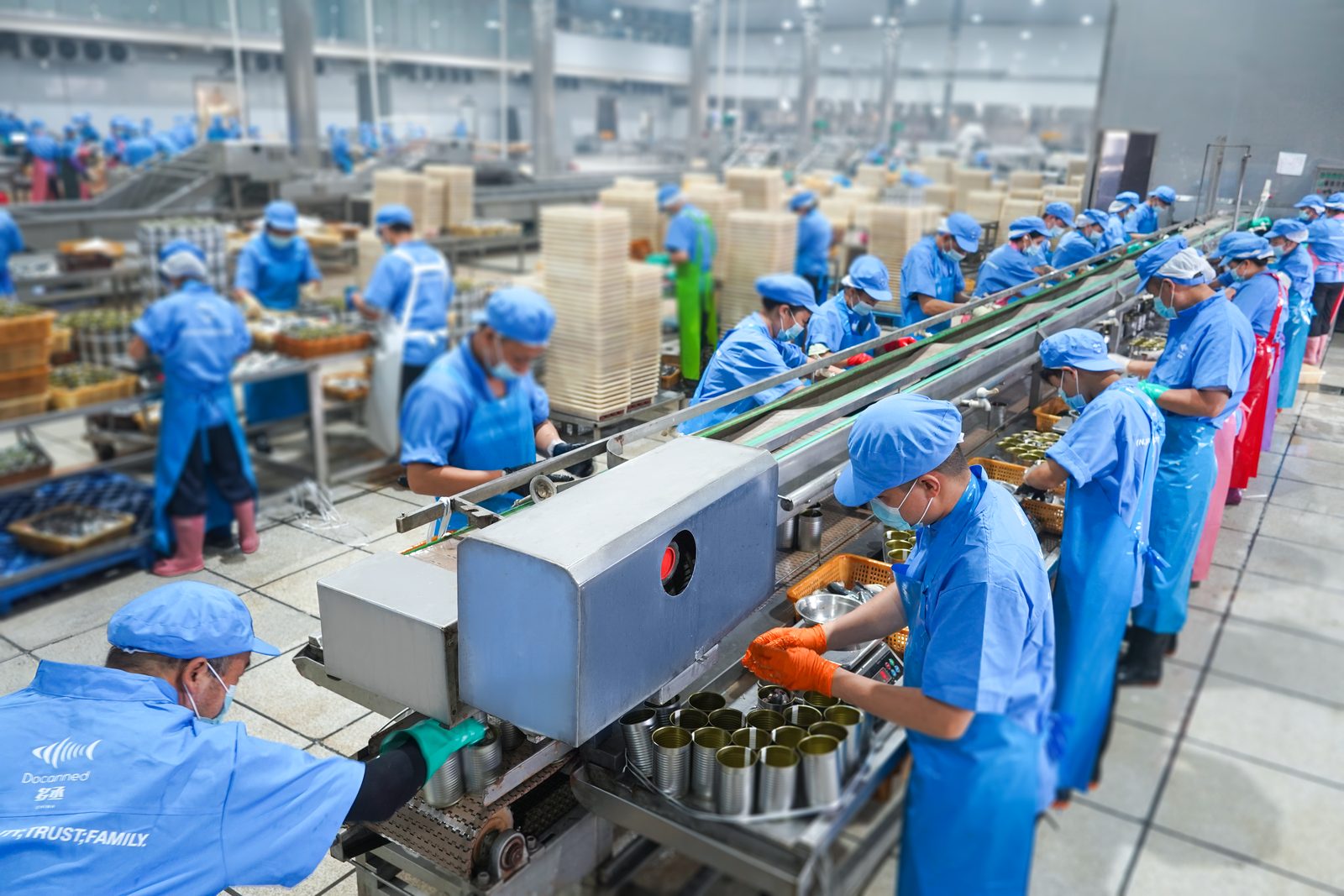
- A-to-Z, in-house. Docanned owns its tin-can plant, cold storage and canneries — so raw fish is cold-stored from catch to can (controlling the histamine risk) and the tin is made in-house, removing the third-party hand-offs that add cost and variability.
- Certifications that support your market applications. BRCGS, HACCP, ISO 9001, ISO 22000, FDA registration (US and Ghana), GMP and Halal — including Ghana FDA, useful for the West-African trade.
- Full private label / OEM. Your recipe, sauce richness, net weight, tin type, label and carton — direct from the factory.
- Ordering. Ships by the 20-foot container, mixed-product loads welcome; typically one 20-ft per size, with lower minimums for new private-label partners.
For related products, see our guides to sourcing a canned sardines manufacturer in China and a canned tuna manufacturer in China.
Ready to source or private-label canned mackerel?
Partner with a factory that owns its entire process — and secure a supply chain that scales with your growth.
Request a quote & free samples →Frequently asked questions
What is “tin fish”?
“Tin fish” is the everyday name for canned fish — usually mackerel or sardines in tomato sauce — in West Africa and among the African diaspora. Canned mackerel in tomato sauce, eaten with rice, yam, plantain or bread, is one of the most common versions.
Which size of canned mackerel sells best?
Two sizes lead the category: the 155g (about 5.5 oz) single-serve can and the 425g (about 15 oz) family can. The 425g in tomato sauce is the workhorse of the West-African and Caribbean market.
Do I need NAFDAC or SONCAP to import canned mackerel into Nigeria?
Generally yes. Imported packaged food usually needs NAFDAC product registration, and regulated imports typically need a SONCAP certificate before shipment. Requirements change, so confirm the current rules with a licensed local agent and start the process early — it is often the longest lead item.
What certifications should a canned mackerel manufacturer have?
Look for BRCGS and HACCP, ISO 9001 / ISO 22000, and Halal and FDA registration / GMP where your markets require them. Remember that a factory’s certificates support, but do not replace, your in-country product registration (such as NAFDAC or Ghana FDA).
Why does cold storage matter for canned mackerel?
Mackerel is a scombroid fish and can form histamine if it warms up before processing — and histamine is not removed by cooking or canning. High histamine is a real cause of rejected shipments, so an unbroken cold chain from catch to can matters.
What is the difference between mackerel in tomato sauce and with chili?
Both start from the same mackerel-in-tomato-sauce base; the chili version adds heat (a Scotch-bonnet-style kick) that is popular in West-African markets. Many brands carry both as separate SKUs.
Can I put my own brand on canned mackerel?
Yes. With a manufacturer you can run a private-label or OEM programme — your recipe, sauce richness, net / drained weight, tin type, label and carton under your own brand. If your volume is below the OEM minimum, some suppliers also offer a ready-made brand to distribute.
What is the HS code for canned mackerel?
Prepared or preserved mackerel, whole or in pieces, falls under HS heading 1604.15. Confirm the full national tariff code and duties with your customs broker.