If you import, distribute, or private-label canned tuna, China is one of the largest and most flexible places to source it. The catch is that “canned tuna” hides dozens of decisions — species, cut, packing medium, can size, certification, and market-specific compliance — and getting any of them wrong can mean a rejected shipment or an unsellable product.
This guide is written for distributors, importers, retailers, and brand owners who want to source wholesale or private-label canned tuna from China and understand exactly what they are buying. It covers how to choose a species and cut, packing and can formats, the certifications and food-safety rules that actually matter, how private-label and OEM programmes work, and how to vet a canned tuna manufacturer in China so you deal with a real factory rather than a middleman.
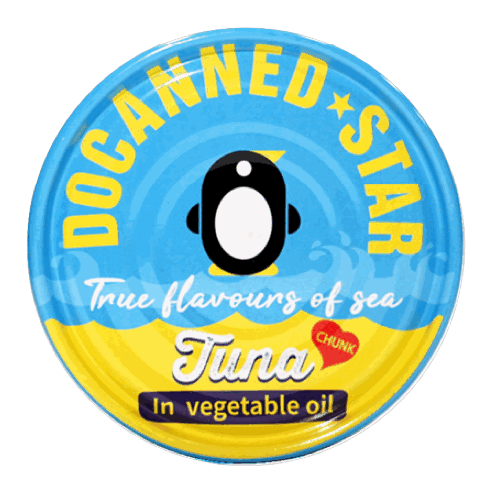 In Vegetable Oil
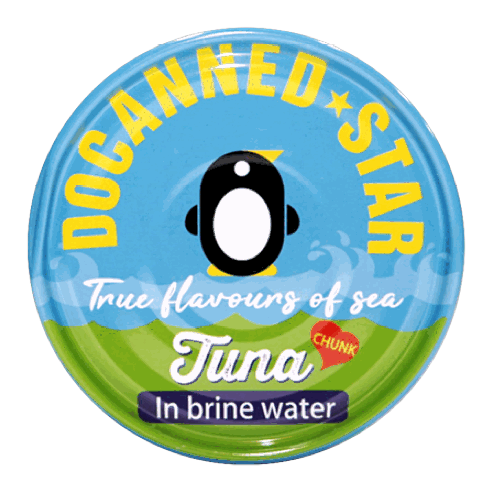 In Brine Water
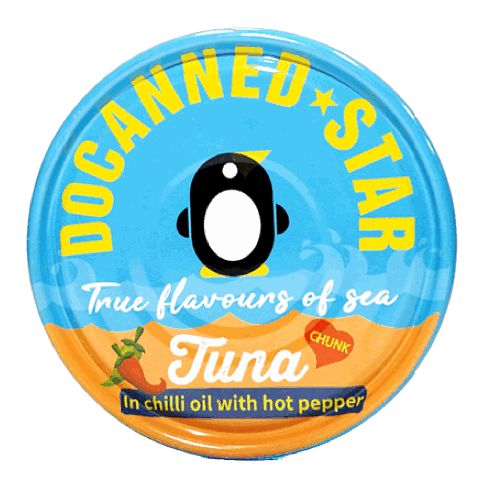 Chili & Hot Pepper
Why source canned tuna from China?
China is a major processor and exporter of shelf-stable seafood, with an established base of canneries, tin-plate suppliers, and export-trade infrastructure. For buyers, that usually means three things: a wide range of specifications in one place, competitive factory pricing, and suppliers experienced in export documentation for many markets.
Two practical points decide how good your experience will be:
- Factory vs trader. Many “suppliers” online are trading companies that resell from canneries. Buying directly from the manufacturer gives you more control over recipe, size, label, carton, and price — and a clearer line of accountability if something goes wrong.
- Regional clusters. Coastal provinces such as Fujian are long-established canning hubs, which helps with raw-material supply, cold chain, and skilled processing.
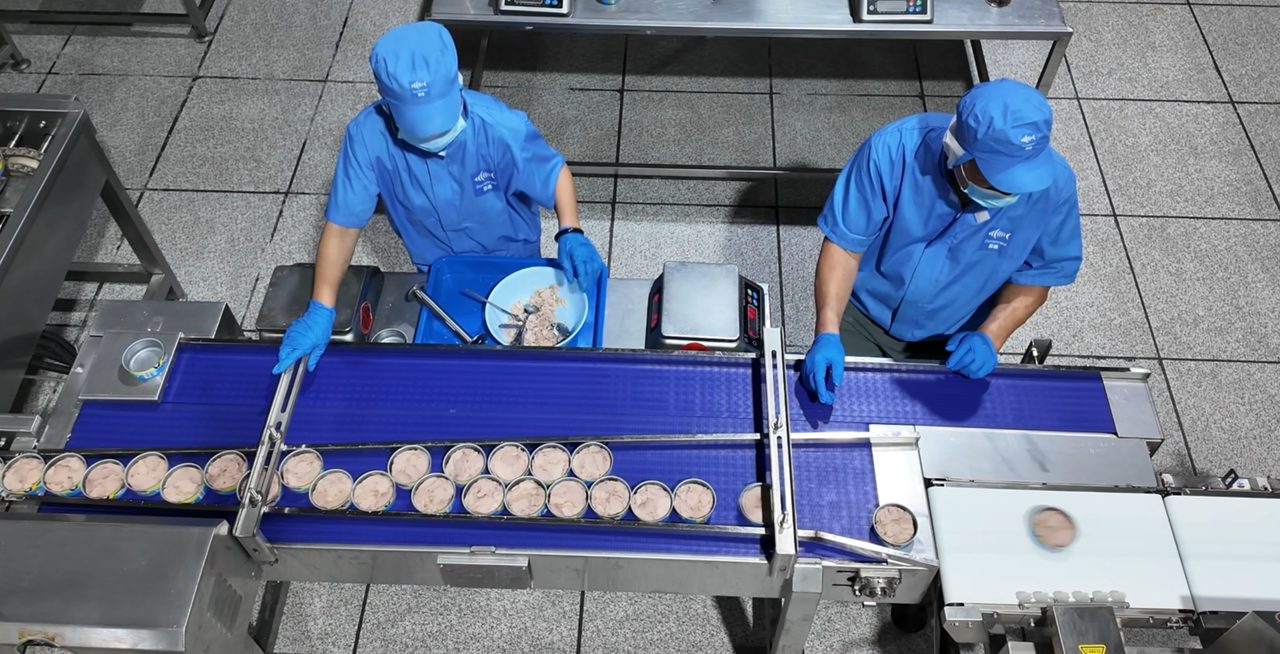
A vertically integrated manufacturer — one that controls raw-material sourcing, cold storage, canning, and even its own tin-can production — removes the hand-offs between separate vendors, which tends to improve both cost and consistency.
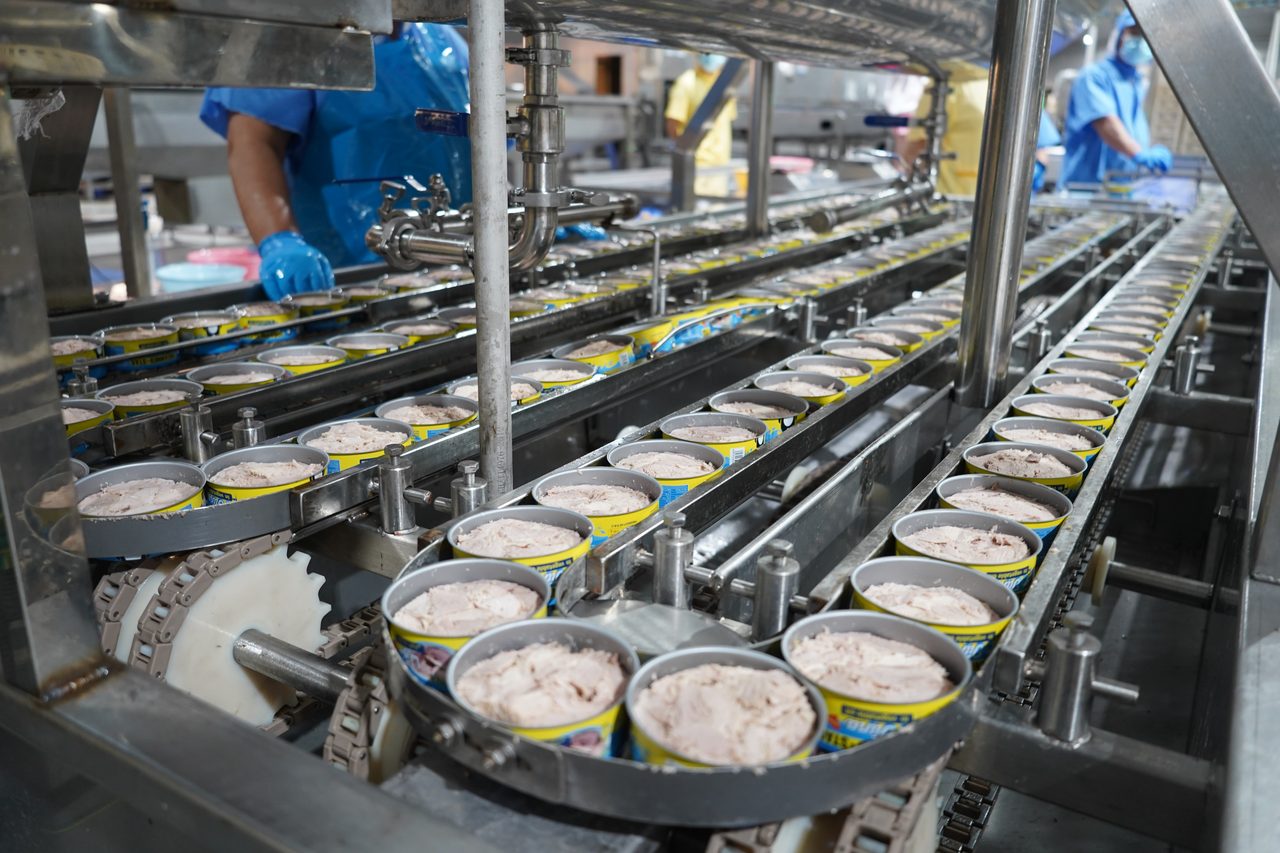
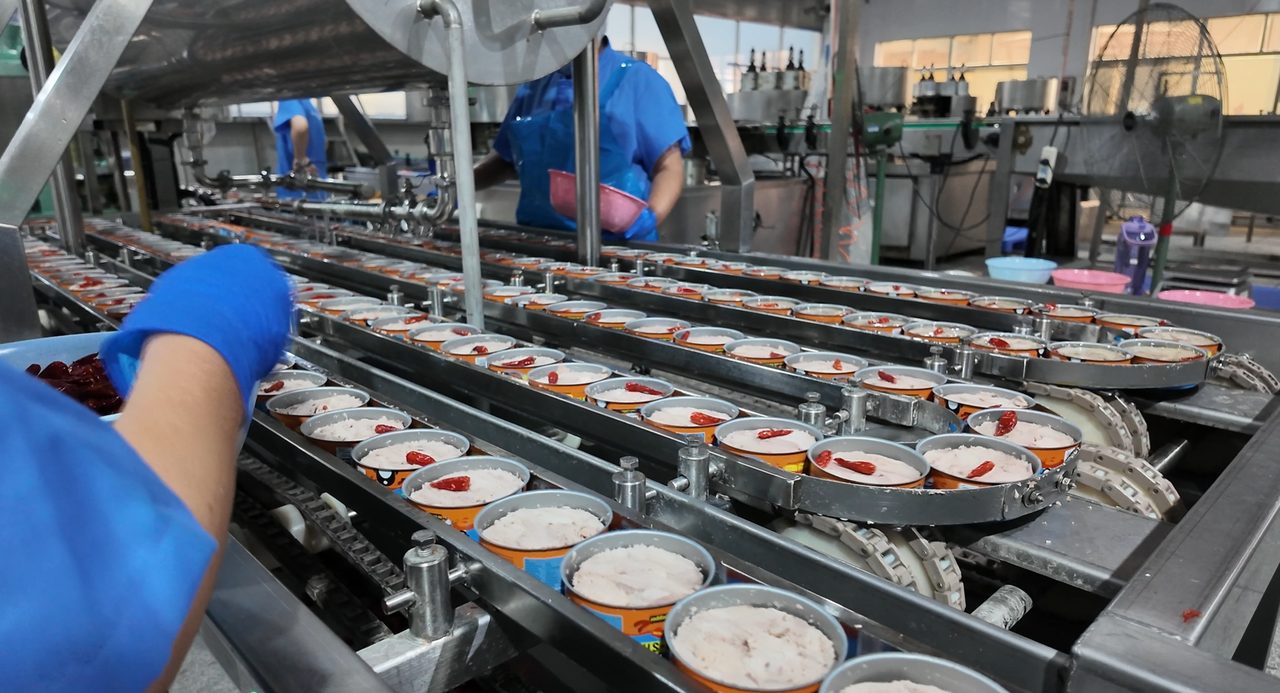
Tuna species used for canning
Most canned tuna in the world is skipjack. Skipjack makes up roughly 60% of the global tuna catch and the large majority of canned/“light” tuna, because it is abundant, affordable, and cans well. The species you choose changes the flavour, texture, colour, and price of your product, so it should be set in your specification rather than left as “tuna”.
The tuna species we can
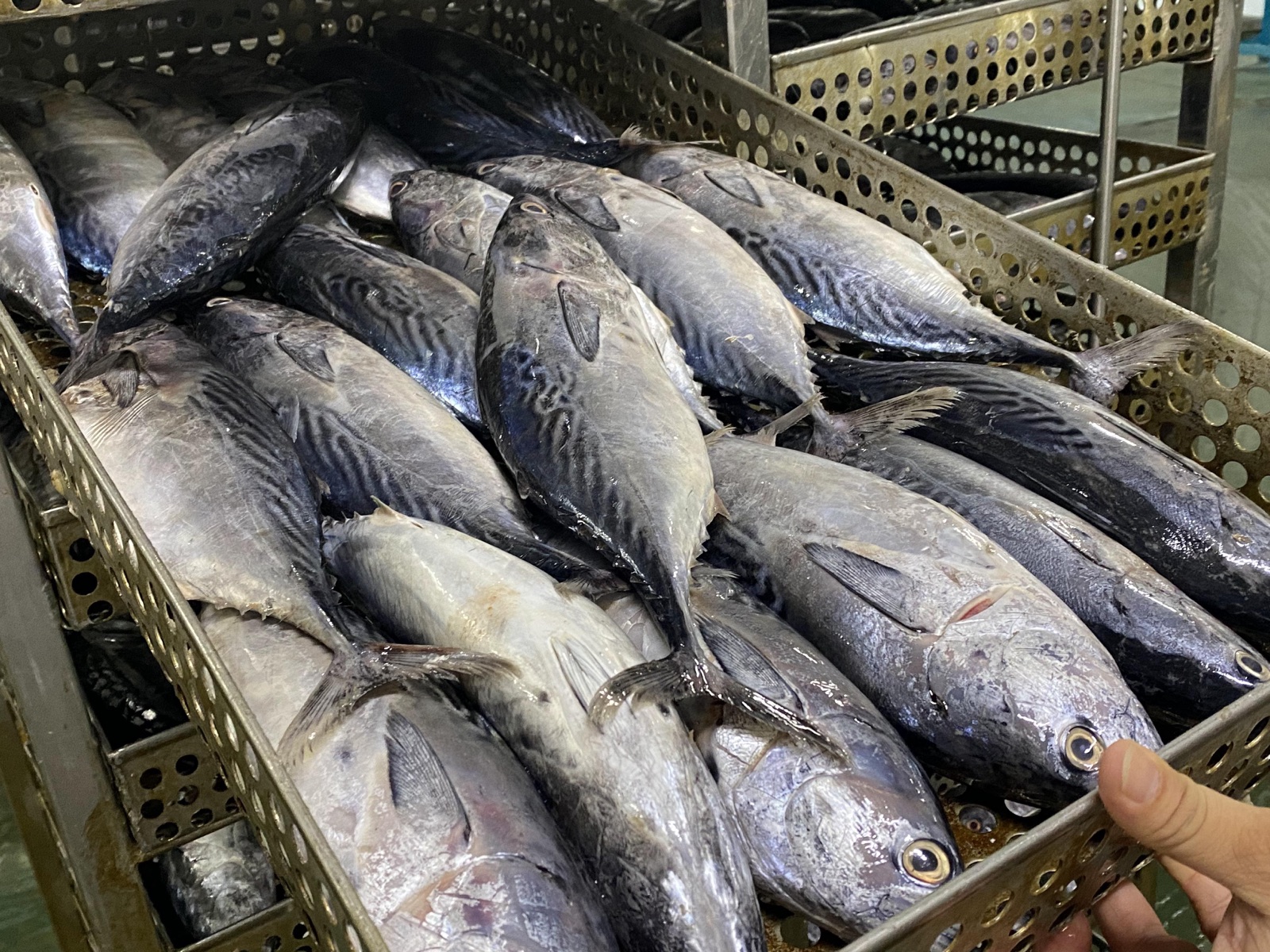
Docanned cans three related tuna species, all caught in the East and South China Sea and cold-stored from the catch. Each has firm, flavourful light meat that cans well and holds its texture, giving a consistent, good-value product line.
| Species (common name) | Scientific name | Meat & character | Typical packs |
|---|---|---|---|
| Skipjack | Katsuwonus pelamis | Light meat; mild-to-full tuna flavour; the tuna in most cans worldwide | Chunk light, flakes |
| Kawakawa (Mackerel tuna) | Euthynnus affinis | Firm, flavourful meat that holds its texture well in the can | Chunk, flakes |
| Longtail tuna | Thunnus tonggol | Firm, pale-pink meat | Chunk, flakes |
Skipjack and kawakawa are available year-round; longtail tuna is seasonal (roughly August to February). Confirming the exact species — and its scientific name — in your purchase specification matters, because “tuna” alone is not enough for labelling or customs.
Cuts, packing media, and weights
Cuts (the physical form of the fish)
Docanned packs chunk and flakes. For reference, the common canned-tuna cuts are:
| Cut | What it is | Best for |
|---|---|---|
| Chunk | Bite-size pieces | Everyday, versatile |
| Flakes | Small broken pieces | Sandwiches, mixing, value lines |
| Solid | Whole loin pieces | Premium presentation (usually larger species) |
| Shredded / grated | Finely broken pieces | Spreads, food service |
Packing media (the liquid)
| Medium | Profile | Common markets |
|---|---|---|
| Vegetable / sunflower oil | Rich, everyday staple | West Africa, SE Asia, Middle East, global |
| Brine water | Light, lower-fat, natural taste | Europe, North America, health-focused |
| Chili / hot | Bold, on-trend, ready-to-eat | SE Asia, Africa, younger buyers |
Docanned packs tuna in vegetable oil, brine water, or chili, in cans and pouches. Other media can be discussed to match a target market.
Net weight vs drained weight (specify this)
Net weight is the total contents — fish plus packing liquid. Drained weight is the fish alone after the liquid is poured off. Always specify the drained weight in your purchase order: it determines how much fish the consumer actually gets, it is regulated in many markets, and two cans with the same net weight can contain very different amounts of tuna. A typical retail can states both.
Can sizes, formats, and packaging
Canned tuna is sold in cans and flexible pouches, with a typical shelf life of 2–5 years. The 185g can is the most common retail format worldwide, and common single-serve and catering formats are also available. For your exact options, use Docanned’s product specifications (can sizes and drained weights) rather than assuming a generic market size.
For private label, plan the packaging early: the label and carton must carry the correct market-specific information (nutrition panel format, language — for example Arabic for many Middle-East markets, ingredient and allergen statements, net/drained weight, country of origin, barcodes). Cartons are typically loaded and shipped by the 20-foot container; ask whether the factory allows mixed-product loads so you can combine tuna with other canned lines in one container.
Certifications and food-safety compliance
There are two things to check: (1) the factory’s food-safety certifications, and (2) the import rules for your destination market.
Factory certifications to look for
- BRCGS and HACCP — internationally recognised food-safety standards.
- ISO 9001 / ISO 22000 — quality and food-safety management systems.
- Halal — required for many Muslim-majority markets.
- FDA registration and GMP — good manufacturing practice and facility registration.
Ask for current certificates and confirm they cover the specific product and facility — a certificate for a different product line or an expired one does not help you.
Food safety specific to canned tuna
Two technical points matter more than any marketing claim:
- Histamine (scombrotoxin) control. Tuna forms histamine if the raw fish warms up before it is processed — and histamine is not destroyed by cooking or canning. The defence is an unbroken cold chain from catch to can. This is a concrete reason to prefer a supplier with its own cold storage rather than one that depends on third-party facilities.
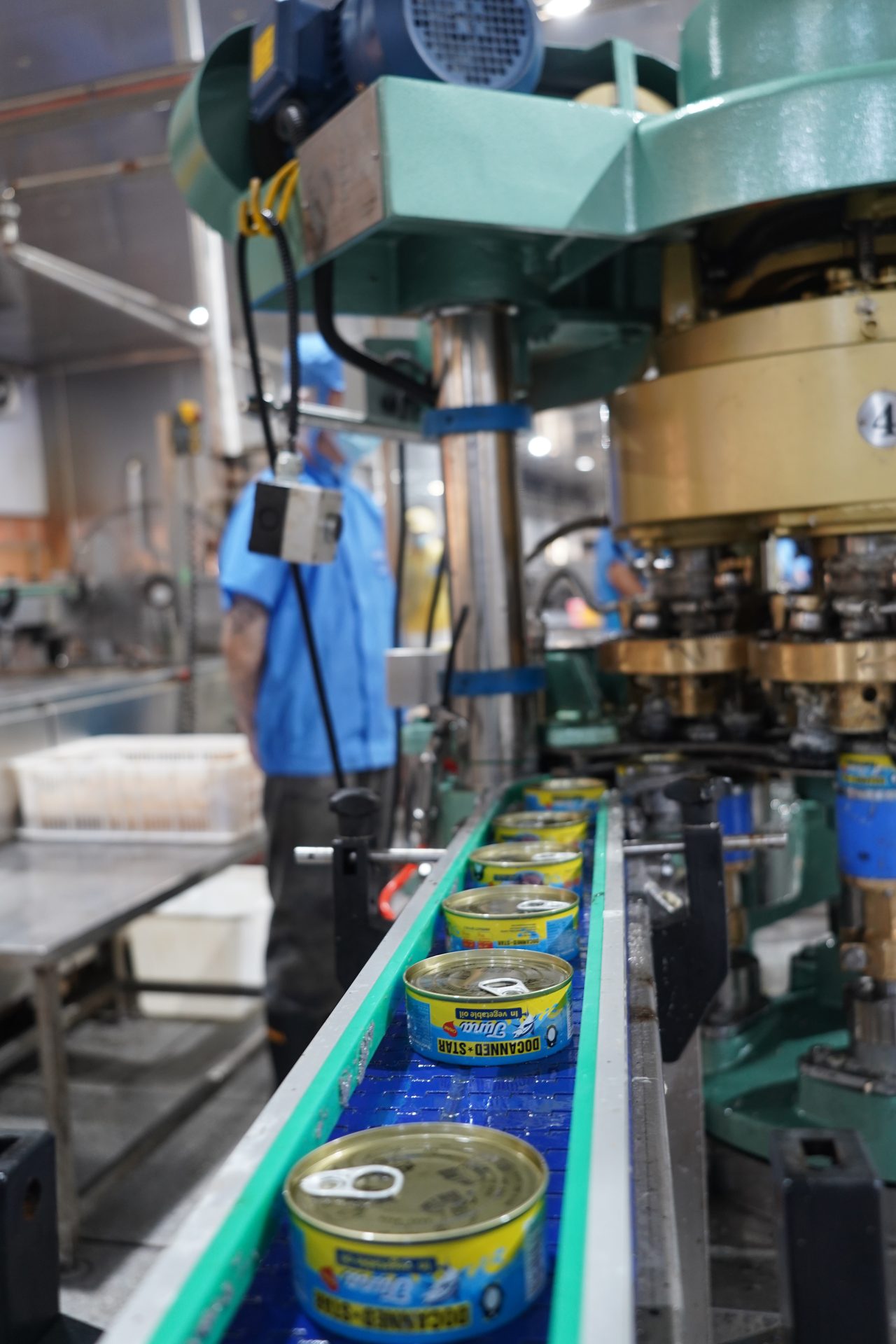
- Thermal processing (retort) for commercial sterility. Canned tuna is a low-acid food, so it must receive a validated heat treatment to be shelf-stable and safe. A credible factory can show a scheduled process validated by a qualified process authority, plus records of retort temperature-distribution and heat-penetration studies, and intact can double-seams.
Destination-market rules
Every destination market sets its own import rules, and it is the buyer’s job to confirm them before ordering. In practice that means checking the correct labelling for your market (language, nutrition format, ingredient and allergen statements, net/drained weight, country of origin), and any market-specific registrations or certificates. For Middle-East and other Muslim-majority markets, this means valid Halal certification and correct Arabic labelling. Confirm your market’s requirements with your customs broker or the relevant authority.
The HS code
For customs, prepared or preserved tuna (and skipjack) in airtight containers falls under HS heading 1604.14. Confirm the full national tariff code and any duties with your customs broker for your destination.
Private label vs OEM vs a ready-made brand
These terms are used loosely, so it helps to define them:
- Private label: the factory’s existing product, sold under your brand name and label.
- OEM: the factory produces to your specification — you control recipe, size, tin type, label, and carton.
- ODM: the factory also contributes the product/design, which you then brand.
Steps to launch a private-label canned tuna line
- Define the product: species, cut, packing medium, can size, drained weight, and target retail price.
- Confirm the target market’s rules: labelling language, nutrition format, and any required certificates (for example Halal certification and Arabic labelling for the Middle East).
- Request samples of the exact specification and taste/inspect them before committing.
- Approve artwork and a printed label proof that is compliant for your market.
- Agree commercial terms: MOQ, price, Incoterms, lead time, and payment.
- Run a first production and pre-shipment inspection, then scale.
If your volumes are below a factory’s OEM minimum — or you want to go to market faster — some manufacturers also sell a ready-made consumer brand you can distribute without building your own from scratch. That is a practical route for smaller buyers who cannot meet private-label MOQs.
MOQ, pricing, and lead times
MOQ (minimum order quantity) for canned tuna is usually quoted per format and market rather than as a single fixed number, because it depends on the can size, label, and whether the run is a stock label or fully custom. Many factories work to a full 20-foot container, but some allow smaller or mixed-product loads. The honest answer to “what is your MOQ?” is that you should send your target market, spec, and volume and ask for an exact figure.
What drives the price:
- Species and cut — species and whether it is chunk or flakes affect cost.
- Packing medium — oil vs water changes cost.
- Can size and drained weight — more fish, higher cost.
- Raw-material tuna price — the world tuna price moves, so quotes are usually valid for a limited window.
- Packaging and certification — custom tins, printed labels, and specific market certs add cost.
Lead times vary by season, capacity, and whether artwork is finalised. Build in time for samples and label approval before the production run.
Logistics and documentation
Canned tuna typically ships by the 20-foot container (its weight usually fills a 20-ft before it fills the volume). Agree the Incoterms (for example FOB or CIF) so you know who is responsible at each stage. Typical export documents include the commercial invoice, packing list, bill of lading, certificate of origin, a health/sanitary certificate, and a Halal certificate where relevant. Your freight forwarder and customs broker will confirm the exact set for your destination.


How to vet a canned tuna manufacturer in China
Use this checklist to separate a real factory from a reseller and avoid the most common mistakes:
- Confirm they manufacture. Ask to see the cannery and, ideally, evidence of in-house canning (and tin-can production and cold storage, if claimed). A video walk-through or an audit report helps.
- Check certifications are current and product-specific. BRCGS/HACCP/ISO/Halal/FDA — with valid dates and the right scope.
- Request and evaluate samples of your exact specification before ordering.
- Lock the specification in writing: species (scientific name), cut, medium, net and drained weight, can size, shelf life, and label.
- Verify market compliance up front: Halal certification and Arabic labelling, or whatever your destination market requires.
- Clarify MOQ, Incoterms, lead time, and inspection before production.
- Ask about mixed loads if you cannot fill a container with one product.
Common mistakes to avoid: treating an online listing as proof of a factory; ignoring the difference between net and drained weight; leaving label compliance to the end; and skipping samples to save time.
Why buyers choose Docanned
Docanned (Fujian Docanned Food Co., Ltd.) is a vertically integrated canned-food manufacturer in Fujian, China, established in 1986 and exporting to 86+ countries. For canned-tuna buyers, the relevant points are:
- A-to-Z, in-house. Docanned owns its tin-can plant, cold storage, and canneries — so raw tuna is cold-stored from catch to can, and the tin itself is made in-house. That controls the histamine risk and removes the third-party hand-offs that add cost and variability.
- Product range. Skipjack, kawakawa (mackerel tuna), and longtail tuna in chunk or flakes, packed in vegetable oil, brine water, or chili, in cans and pouches — available as a ready-made brand or under full private label / OEM (your recipe, net weight, tin type, label, and carton).
- Certifications. BRCGS, HACCP, ISO 9001, ISO 22000, FDA registration (US and Ghana), GMP, and Halal.
- Ordering. Shipping direct from the factory by the 20-foot container, with mixed-product loads welcome; send your target market and volume for an exact MOQ.
Because Docanned is the manufacturer, you deal with the factory directly and control the specification end to end. For a related product, see our guide to sourcing a canned sardines manufacturer in China.
Ready to source or private-label canned tuna?
Partner with a factory that owns its entire process — and secure a supply chain that scales with your growth.
Request a quote & free samples →Frequently asked questions
What is the most common tuna used in canning?
Skipjack. It accounts for roughly 60% of the global tuna catch and the majority of canned “light” tuna because it is abundant, affordable, and cans well. It is usually labelled “chunk light” or “light tuna”.
Which tuna species does Docanned use?
Docanned cans skipjack (Katsuwonus pelamis), kawakawa or mackerel tuna (Euthynnus affinis), and longtail tuna (Thunnus tonggol) — all caught in the East and South China Sea and cold-stored from the catch, in chunk or flakes.
Should I choose tuna in oil or in water?
It depends on the market. Brine water gives a lighter, lower-fat product favoured in Europe and North America; oil (vegetable, sunflower, or olive) gives a richer taste common in West Africa, the Middle East, and Asia. Many brands offer both.
What certifications should a canned tuna manufacturer have?
At minimum, look for BRCGS and HACCP, plus ISO 9001/ISO 22000, and Halal and FDA registration/GMP where your markets require them. Confirm certificates are current and cover the specific product and facility.
What is the MOQ for private-label canned tuna?
There is no single fixed number — it depends on can size, label, and whether the run is a stock label or fully custom. Many factories work to a 20-foot container, but some allow smaller or mixed loads. Send your spec, market, and volume for an exact figure.
What is the HS code for canned tuna?
Prepared or preserved tuna and skipjack in airtight containers falls under HS heading 1604.14. Confirm the full national tariff code and duties with your customs broker.
Can I put my own brand on canned tuna?
Yes. With a manufacturer you can run a private-label or OEM programme — your recipe, net/drained weight, tin type, label, and carton under your own brand. If your volume is below the OEM minimum, some suppliers also offer a ready-made brand you can distribute.
How long does canned tuna last?
Typically 2–5 years, depending on the format and storage. Store in a cool, dry place and avoid dented or swollen cans.